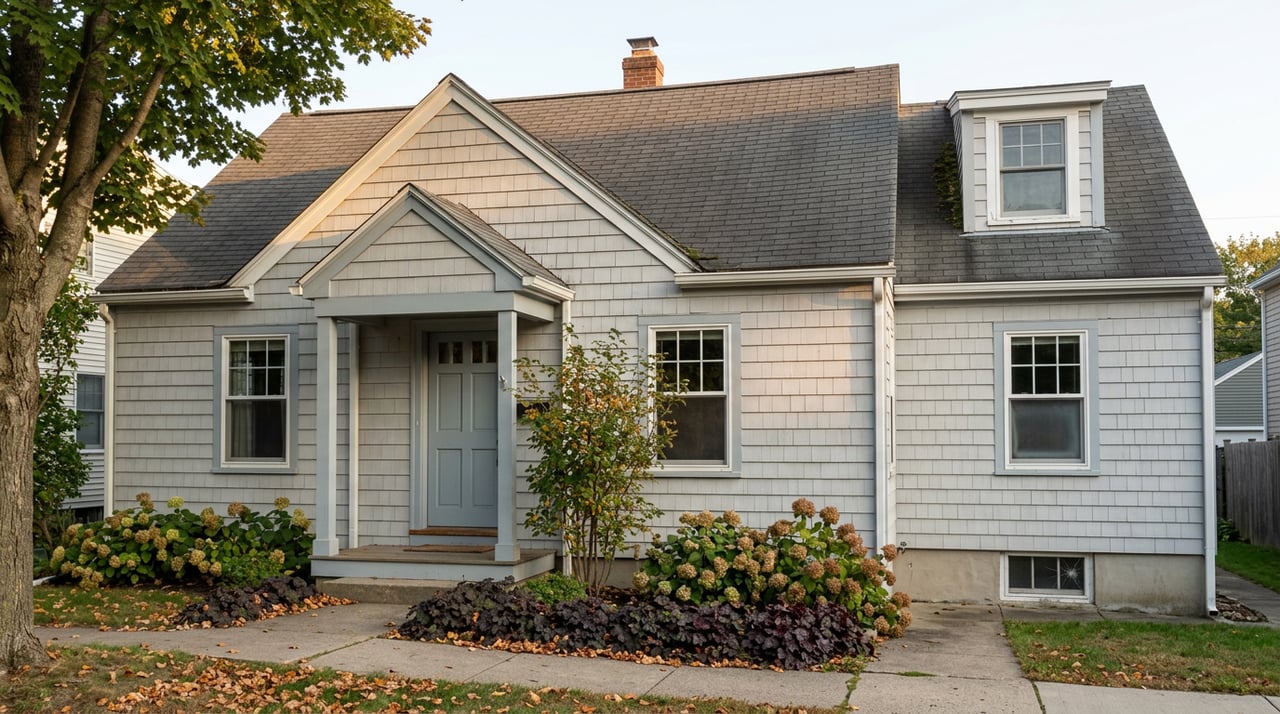
A Knightville cape goes under contract in four days. Full price, clean offer, buyer already picking paint colors. Then the inspector walks the yard and stops at a capped pipe sticking out of the lawn near the foundation, six inches of rusted metal that used to feed an oil tank nobody's used in twenty years. The buyer's agent calls. The seller genuinely didn't think about it. The tank has been sitting there since before they owned the house.
Here's the part that actually threatens the sale: it isn't whether that tank is leaking. It's when the seller told the buyer about it. Under Maine law, that timing question can undo a deal that a clean soil test would have saved.
Why This Question Shows Up in Knightville and Meeting House Hill, Not Cash Corner
South Portland's housing stock doesn't age evenly across the city, and that unevenness is exactly why the oil tank conversation lands hard in some neighborhoods and never comes up in others. A local plumbing and heating contractor who works across the city describes it plainly: century-old capes and shingled colonials cluster in Knightville and Meeting House Hill, still commonly running oil boilers with cast-iron radiators and original galvanized or copper plumbing in the basement. Head toward Pleasantdale and Thornton Heights and the housing shifts to mid-century ranches and split-levels. Push further out toward Highland Avenue and Cash Corner and you're mostly in postwar and newer construction.
That age gradient matters because underground oil tanks are a product of a specific era of home heating, not a citywide feature. A 1920s cape in Knightville was almost certainly built with an oil-fired system, and if that system was ever upgraded, replaced, or converted to gas or electric, the old tank frequently stayed exactly where it was buried. A ranch in Pleasantdale built in the 1950s might have the same story. A house built in the last twenty years near Cash Corner simply never had a buried tank to begin with. If you're selling in one of the older pockets of the city, this is a question worth answering before a buyer's inspector answers it for you.
What Maine Actually Requires You to Say, and When
Maine operates on a modified buyer-beware standard, which means sellers aren't required to hire investigators or dig up their own yard looking for problems, as [Maine Revised Statutes Title 33, §176](https://legislature.maine.gov/statutes/33/title33sec176.html) states. The obligation is narrower and more specific: sellers of one-to-four unit residential property, as [Maine Revised Statutes Title 33, §171](https://legislature.maine.gov/statutes/33/title33sec171.html) defines it, must disclose known material defects, and if your property has an underground oil storage tank, or you know one was removed, that has to go on the Property Disclosure Statement under [Maine Revised Statutes Title 33, §173](https://legislature.maine.gov/statutes/33/title33sec173.html).
The part that trips people up is timing, not content. Under Maine's disclosure statute, the completed form has to reach the buyer before or at the same time they make an offer. If it shows up after the offer is already signed, the buyer gets a 72-hour window to cancel the contract without penalty, regardless of what the disclosure actually says.
That single rule reframes the entire oil tank conversation. A buyer who learns about an old tank on day one, before writing an offer, can factor it into their number and move forward with full information. The same buyer who learns about it after they're under contract has a built-in, no-questions-asked exit, and plenty of buyers will take it just because the process suddenly feels less trustworthy. The tank didn't change. The sequence did.
The State's Tank Numbers Are Too Small to Be a Safety Net for Every Cape
Sellers sometimes assume that if a tank were a real problem, some state agency would already have a record of it. That assumption doesn't hold up well against the actual scale of Maine's program. The Department of Environmental Protection's underground oil storage program covers roughly 3,000 registered tanks at approximately 2,000 facilities statewide, a number that makes sense for filling stations and commercial sites tracked one by one, not for every home that ever ran an oil furnace.
That leaves a gap most buyers never think about. A count in the low thousands, spread across a state with hundreds of thousands of homes, is not a program built to track every buried tank under a South Portland cape. There's no simple state database an agent can query to pull up the history of one residential tank on one lot. What exists instead is whatever the current owner remembers, whatever old paperwork survived, and whatever a tank sweep turns up during due diligence.
That gap has a history behind it. Maine required all buried heating oil piping to be replaced by September 1, 2000, and required outdoor tanks that didn't meet new installation standards to be upgraded by February 2, 2003. That window pushed a lot of homeowners to swap out aging oil systems around the same years, often for gas or, more recently, heat pumps. Plenty of those owners replaced the system and left the old buried tank exactly where it was, because decommissioning in place was simpler than a full excavation. Two decades later, that decision becomes someone else's disclosure question at closing.
The Cleanup Fund Is Real, But It Answers a Different Question
Maine does have a real backstop for oil spills. The Ground and Surface Waters Clean-up and Response Fund, administered by the DEP, reimburses eligible cleanup costs above a deductible when a tank owner reports a discharge. The deductible structure is built around residential-scale tanks, applying to homeowners with up to 1,320 gallons of oil storage, which covers the ordinary size of a single-family heating tank.
The fund isn't hypothetical. Legislative testimony describes how it enabled DEP staff to help residents in December 2023, when rising river waters flooded basements and yards and caused almost 100 home heating oil tanks to spill in a matter of days. That's the fund working as designed, responding to a reported, active discharge.
What it doesn't do is retroactively settle whether a quiet, non-leaking tank sitting under a Knightville lawn counts as something you should have disclosed. That's a real estate law question, not an environmental cleanup question, and it gets decided by the Property Disclosure Statement and the timeline it was delivered on, not by whether the fund would ever need to get involved at all.
What Actually Protects a Seller in These Neighborhoods
For a seller in Knightville, Meeting House Hill, or any older South Portland street where oil heat was standard, a few moves change the outcome:
- Order a tank sweep before you list, not after an offer comes in. Finding out early means you control the disclosure instead of reacting to a buyer's inspector.
- Pull whatever paperwork exists from the system's history: old fuel delivery slips, service records, anything documenting when the house switched to gas, electric, or a heat pump.
- If a tank turns up, make a plan before you have a buyer. Making that call under contract pressure is the version that costs money and leverage.
- Get the completed Property Disclosure Statement into a buyer's hands with the listing, or at minimum before any offer, so the 72-hour cancellation window never becomes a live issue.
A Few Questions Sellers Ask Directly
Can an undisclosed or unaddressed tank become a negotiating point even if it isn't leaking? An undisclosed or unaddressed tank tends to become a negotiating point regardless.
What if I genuinely don't know whether there's a tank? The law limits your obligation to actual knowledge, and an honest "unknown" answer is legally sound. In a house with the age and heating history common to Knightville or Meeting House Hill, treating that uncertainty as something worth resolving before listing, rather than an easy answer to give at inspection, tends to produce a smoother sale.
If you're weighing a listing in one of South Portland's older neighborhoods and want a straight read on how this plays into your specific timeline, Ashley Fearon and the team at A Team Realty work through exactly this kind of local detail before a house ever hits the market. Book your free seller strategy consultation and get the disclosure timeline right from the start, not after an offer's already on the table.
This article is general information, not legal, tax or financial advice. Consult a qualified professional about your situation.